Water Damage Restoration
A complete restoration process covering inspection, water extraction, removal of unsalvageable materials, structural drying, moisture monitoring, cleanup, and preparation for reconstruction.
Serving Orange County, California & surrounding areas
Get a clear response plan for leaks, flooding, and wet building materials, with careful cleanup, moisture tracking, structural drying, and repairs for your Orange County property.
Assessment before assumptions
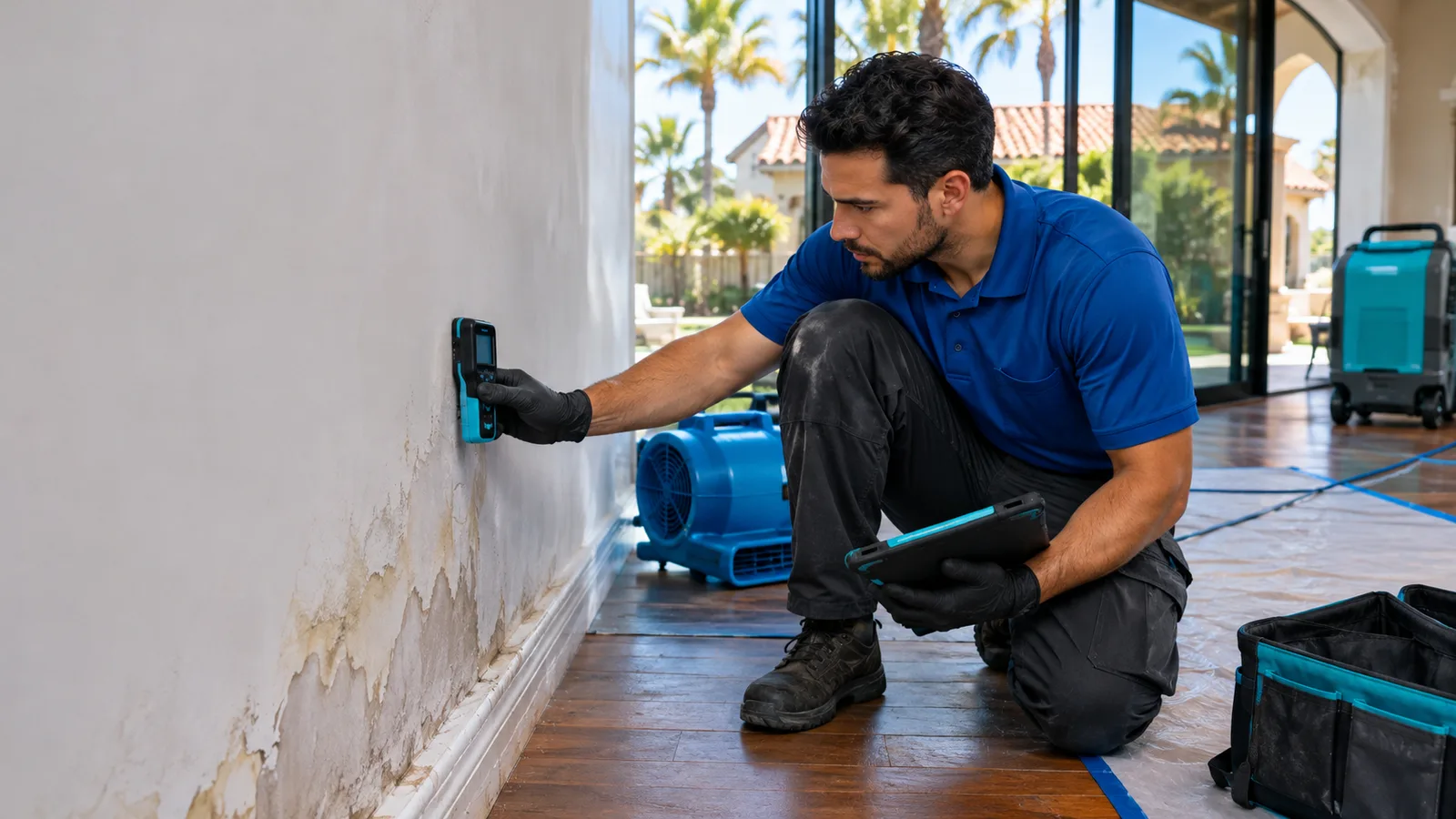
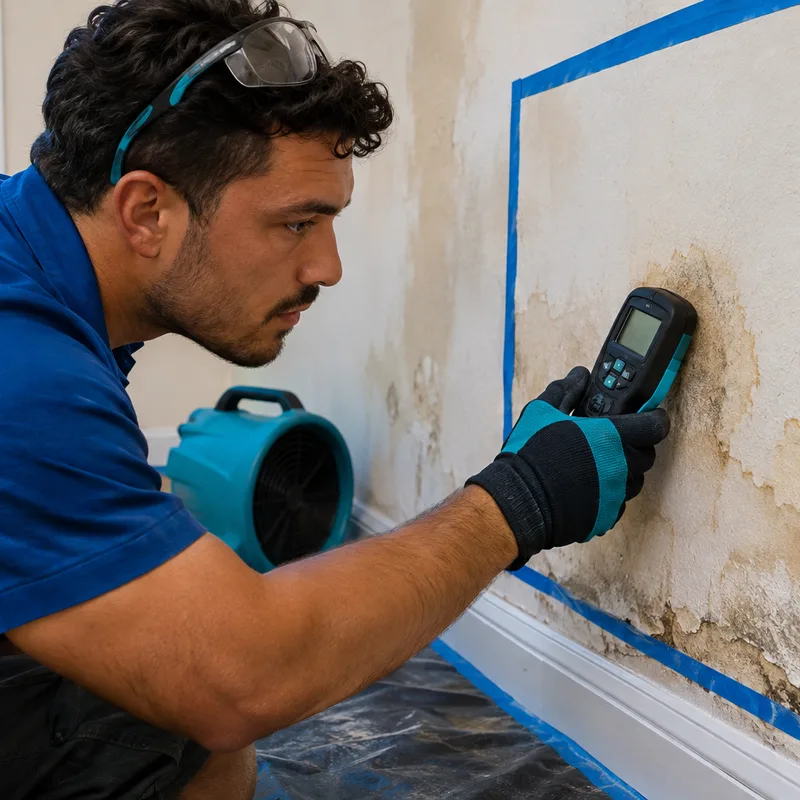
Water damage Orange County services should address more than the visible puddle. Water can travel beneath flooring, soak drywall, enter insulation, and collect inside cabinets or wall cavities. A useful assessment traces the likely source, checks affected materials with moisture meters, and defines the drying area before repairs begin.
The right response depends on the water source, how long materials stayed wet, and whether porous finishes can be dried or need removal. Extraction, controlled demolition, air movement, dehumidification, and moisture monitoring may all form part of the work. Once drying goals are reached, damaged finishes can be repaired so the property is ready for normal use again.
Orange County properties face different risks, including plumbing leaks, appliance failures, roof intrusion during winter rain, and supply-line breaks. Acting early can limit water migration and give property owners a clearer record of the affected areas and completed work.
Cleanup, drying and repair
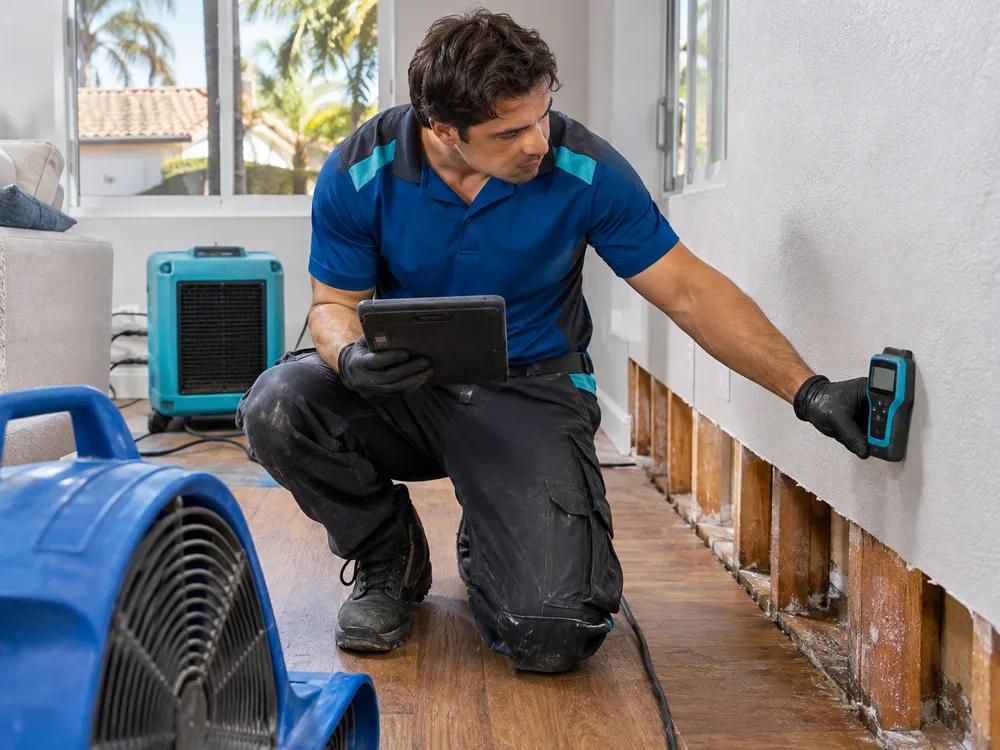
A complete restoration process covering inspection, water extraction, removal of unsalvageable materials, structural drying, moisture monitoring, cleanup, and preparation for reconstruction.
Urgent help for active leaks, burst supply lines, appliance overflows, storm intrusion, and other incidents that require prompt containment and damage assessment.
Repair of damaged drywall, baseboards, flooring, cabinets, paint, and other finishes after affected materials have been removed and the structure has been dried.
Measured decisions at every phase
The first assessment considers the water source, electrical concerns, contaminated materials, and the path moisture may have taken. These findings guide containment, removal, and drying decisions.
Meters help identify damp drywall, framing, flooring, and cabinets beyond the obvious wet area. Recorded readings provide a practical basis for setting the work area and tracking drying progress.
Standing water is extracted, while materials that cannot be dried safely are identified for removal. Salvage decisions depend on material type, exposure, condition, and the category of water involved.
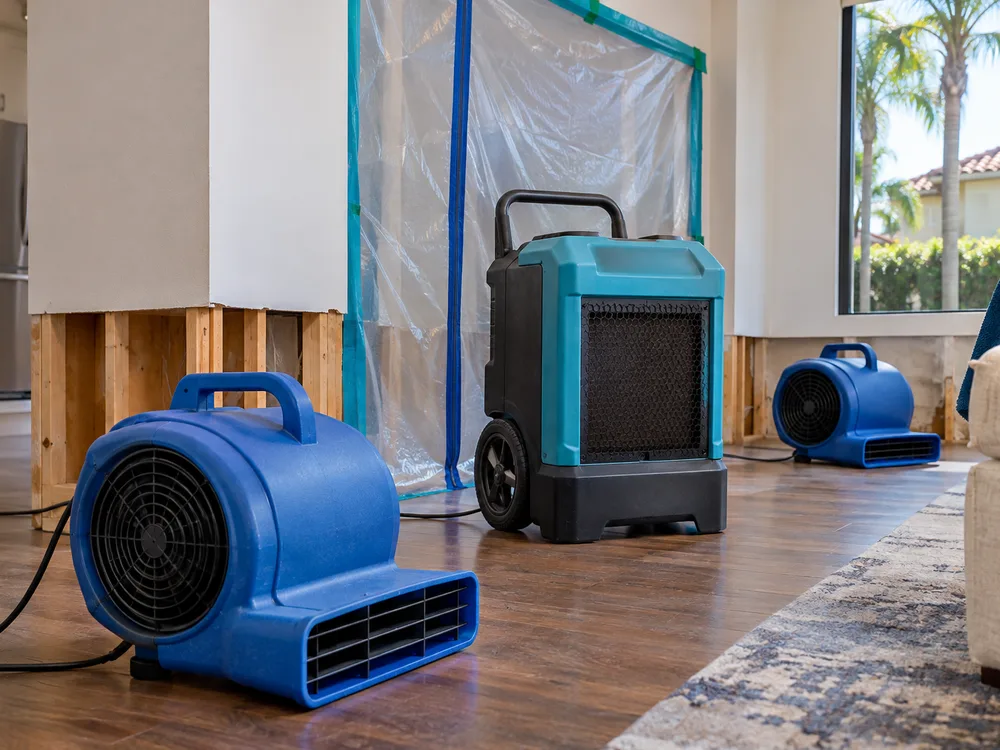
Air movers and dehumidifiers are positioned according to the affected space and materials. Conditions are monitored so equipment can be adjusted as moisture leaves the structure.
Photos, moisture readings, affected material notes, and a written scope help owners understand what needs attention. This documentation may also support conversations with an insurance carrier.
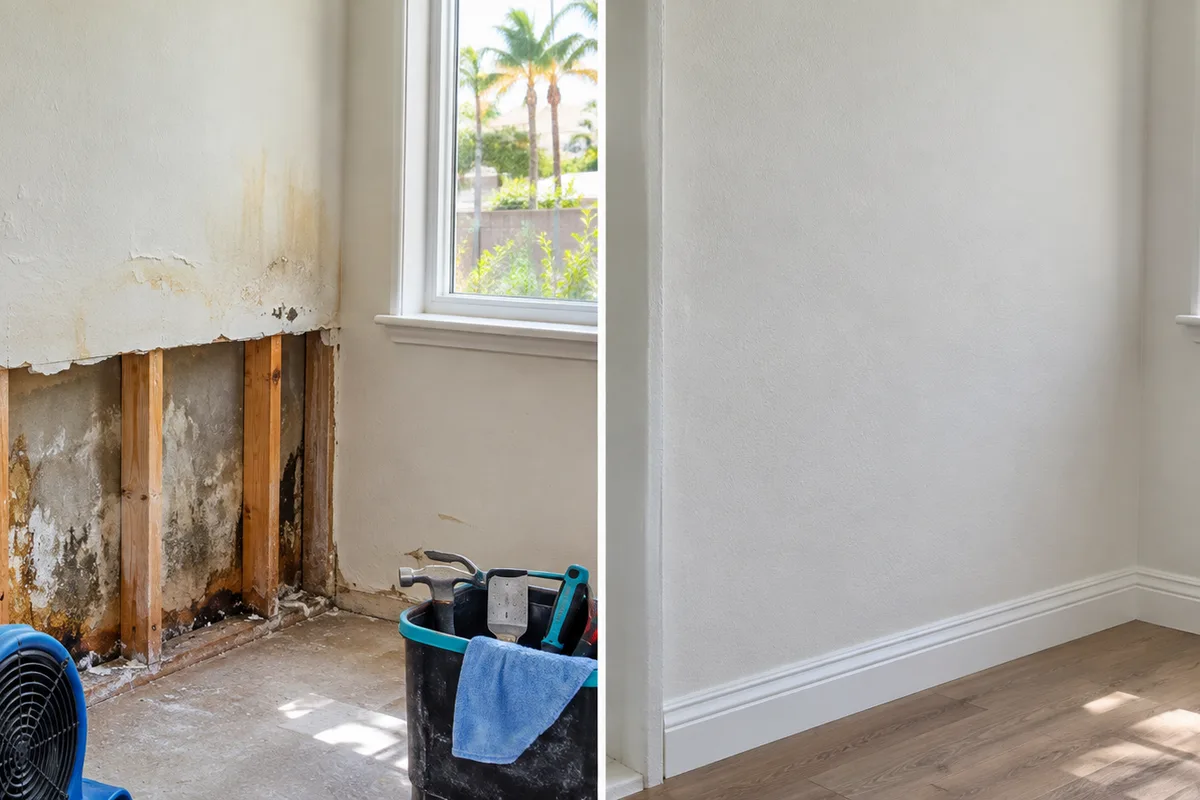
After drying is verified, the repair scope can address removed drywall, trim, paint, flooring, or cabinetry. Separating mitigation from reconstruction keeps each phase easier to review.
Local restoration planning
Water Damage Orange County CA provides water damage services across Orange County, California.
The work begins with the conditions inside the property, not a standard package. A small supply-line leak may require focused extraction and cabinet inspection, while water that has crossed several rooms may call for broader moisture mapping, material removal, and drying equipment.
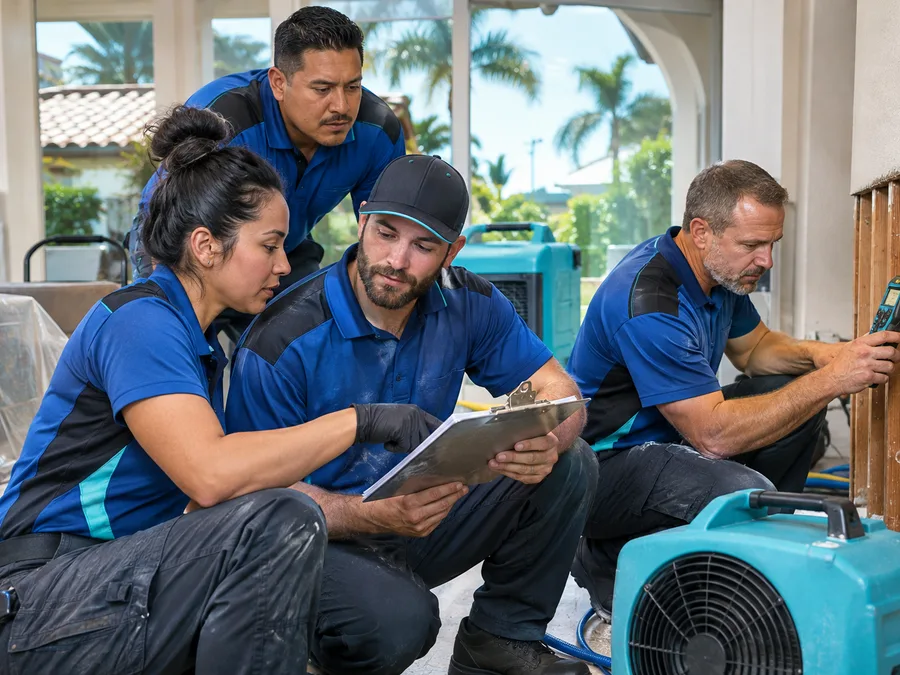
Clear communication matters because owners often need to make decisions while the building is disrupted. The scope should identify what is wet, what may be saved, what needs removal, and what must happen before repairs start. Photos and readings can create a useful record for property owners, managers, and insurance representatives.
The goal is a sensible path through mitigation, drying, and repair. Water Damage Orange County CA can discuss the affected areas and outline the next practical step without relying on assumptions about damage hidden behind finishes.
Planning the scope
Water damage restoration in Orange County typically costs about $1,500 to $6,000, while limited clean-water extraction may run $500 to $1,500 and extensive drying, demolition, or reconstruction can exceed $10,000.
Final cost depends on the water category, affected square footage, time wet, access, material removal, equipment needs, and repairs. Hardwood, cabinets, insulation, and multi-level migration can increase labor and drying time. Insurance coverage depends on the cause and policy terms. The exact cost is confirmed after an on-site inspection.
From assessment to repair scope
Step 1 of 5
The property is checked for active water, safety concerns, visible damage, and moisture that has moved beneath or behind finishes.
Step 2 of 5
Water is stopped when accessible, standing water is removed, and the work area is contained when demolition or contamination makes separation necessary.
Step 3 of 5
Damaged porous materials are evaluated based on exposure and condition. Approved removal can expose wet cavities and make structural drying more effective.
Step 4 of 5
Air movement and dehumidification are established for the affected materials. Moisture readings are checked during the drying period and equipment is adjusted as needed.
Step 5 of 5
Once drying goals are met, remaining damage is documented and the repair scope can address walls, trim, flooring, cabinets, paint, and other finishes.
Early assessment can limit water migration and replace uncertainty with a written scope for cleanup, drying, and repair.
Request Emergency ServiceLocal property knowledge
Water Damage Orange County CA works across established coastal communities, central Orange County neighborhoods, and inland residential areas.
Detached homes, apartments, and older commercial corridors create varied plumbing layouts, so moisture may travel through shared walls, ceilings, or several finished rooms.
Condominiums and planned communities often have attached construction, where an appliance or supply-line leak can affect neighboring walls, flooring, and units below.
Coastal moisture can slow natural drying, making measured dehumidification and verification important after roof intrusion, plumbing leaks, or appliance overflows.
Older homes and mixed-age buildings can contain layered flooring and previous repairs that hide moisture beneath finishes or complicate selective material removal.
Hillside and coastal properties may have multiple levels, built-in cabinetry, and premium finishes that require careful moisture mapping before removal decisions are made.
Mid-century homes and established neighborhoods often include aging supply lines, slab foundations, and original materials that need focused inspection after a leak.
Inspection, drying and repair

Common questions
Straightforward guidance about assessment, cleanup, drying, insurance documentation, and repair planning.
Assessment timing depends on current availability and the urgency of the incident. Active leaks, standing water, wet ceilings, and water near electrical components should be described clearly so the situation can be prioritized appropriately.
You can report the loss promptly, but urgent steps to protect the property may need to begin before an adjuster visits. Keep photos, invoices, moisture records, and removed-material notes, then follow your carrier's instructions.
Some materials can be dried, while others require removal based on contamination, swelling, delamination, exposure time, and access. Moisture readings and physical condition guide the decision rather than surface appearance alone.
Repair needs can be reviewed after drying is complete. The scope may include drywall, baseboards, paint, flooring, cabinets, or other finishes affected by the water or necessary removal.
Describe the apparent source, when the problem was found, which rooms are affected, and whether water is still entering. Mention wet ceilings, electrical concerns, sewage, or damage extending into another unit.
Service may be appropriate for houses, condominiums, apartments, rental properties, and commercial spaces across Orange County. Access requirements and shared-building rules should be identified when arranging an assessment.
Describe what happened and where the water traveled. Water Damage Orange County CA can help define the affected area and the next steps for cleanup, drying, and repair.